






Business partner
Business partner
 | |||||||||||||||||||||||||||||
 |
| ||||||||||||||||||||||||||||

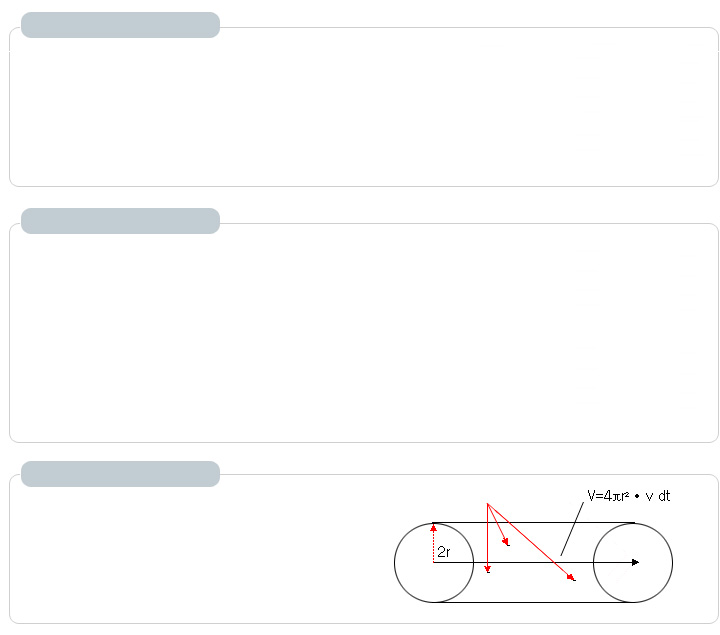
1. Vaccum
It is technologically impossible to create a perfect vacuum state in the space where nothing exists. Normally, a vacuum state means a highly decompressed state. Practically, the vacuum state which we can create is approximately 10 ~ 15 tons and it includes 35 molecules per 1cm². The space between an atom and another atom, and the space between an orbit electron and a nuclear atom, could be said to be a “vacuum.”The space in the universe’ is composed of a highly vacuum state. Theoretically, the condition in which the energy level reaches the bottom is defined as a vacuum. According to the Jang Theory, due to the fact that Jang of Power always contains an elementary particle, the state in which an elementary particle does not exist can not be made as long as there is Jang of Power.
2. Vacuum Pressing
After heating a small piece of metal or non-metal in the vacuum state, we stick that steam to the surface of the material. We take materials which were covered by a container in the vacuum state and between those surfaces, we put particles of metals which we are going to stick. Using a heating device, we make a volatilization metal particle condensate into the cold surface of the material and stick onto the outer layer of the skin. It is necessary to maintain the high vacuum state, up to the point where it makes the distance between the heating device and the surface of pressed material smaller, compared to that of average free course of numerator. Apart from that, it should be noted that we need to clean the surface and remove absorbed water completely. If we stick material in the very highly vacuum state, more than 10 ~9 mmHg, we are able to make a clean screen without any influence of impurities. The fact that any material can be stuck is one feature, and if we might add, we can stick aluminum onto cloth or silver onto plastic.
3. Theory of vulcanization of u.v
The vulcanization of U.V is the process in which a polymerization monomer of the liquid state absorbs u.v , creates a chemical reaction and finally is dried.Therefore, hardened u.v paints are composed of monomers and light variations of materials which can absorb u.v.



4. Classification of pellicle technology
| Field | |
| PVD | Evaporation * Therrnal Eavporation * Electron beam Evaporation |
| Sputtering * DC/RF Sputtering * Magnetron Sputtering * Ion BeamSputtering | |
| IonPlating * DC Glow-HF Glow-Hollow Cathode * Low Voltage ArcDischarge | |
| Ion beam Deposition | |
| Laser Assited PVD | |
| CVD | * High Temp.
CVD-Mediujm Temp.CVD * Low Temp. CVD-Plasma CVD * Photon CVD. Laser Assited CVD |
5. Equipment
6. Certification Mark
|
Name | Standard(Capability
of
Processing) |
Quantity |
Remark |
| HIGH VACCUM
COATING |
Φ800~Φ2000 |
1 |
|
| AUTO CLEAN
M/C |
1200*6000 |
4 |
|
| AUTO SPRAY
CONVEYOR
LINE |
URETHAN=5 |
1 |
|
| UV COATING
LINE |
|
1 |
|
| YRETHAN
COATING
LINE |
|
1 |
|
| ION BEAM
ASSITED E-BEAM
EVAPORATIOR |
Φ1650*1500 |
1 |
Vertical coating Type |
| IN LINE SPITTER SYSTEM | 2500*1500*15000 | 1 |
2 chamber in line |
| AUTOMATIC
SILK
PRINTING |
1600*1000 |
1 |
|
| DRYING OPEN
BOX |
4000*4000*25000 |
1 |
|
| Automatic Supersonic Wave Cleansing |
A kind of hydrocarbon
|
1 |
|
| Temperature & Humidity Chamber | General type |
1 |
Measurement & Examination Instrument |
| Wearing test |
General type |
1 |
Measurement & Examination Instrument |
| UV. Tester |
9500*1000H |
1 |
Measurement & Examination Instrument |
| Measuring instrument of surface hardness |
|
1 |
Measurement & Examination Instrument |
| Measuring Instrument of fragment thickness |
|
1 |
Measurement & Examination Instrument |
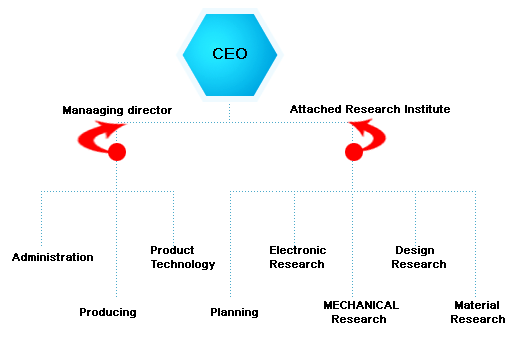
7. Technology Organization

